Tired of Skipping Workouts? How Smart Power Strips Quietly Keep Your Fitness Routine on Track
Staying consistent with exercise is hard—especially when life gets busy. You buy the gear, set the goals, but then something always gets in the way. What if the secret to sticking with your routine wasn’t more willpower, but smarter use of the tech around you? I discovered that managing my home’s electricity intelligently didn’t just cut bills—it helped me move more, stress less, and feel in control. It’s not about gadgets; it’s about creating a home that supports your health. And the most surprising helper? A small, unassuming device sitting behind my treadmill: a smart power strip.
The Fitness Goal That Kept Failing—Until I Looked Beyond the Workout
Like so many of us, I’ve started the year with big plans. January rolls in, and I’m all in—new leggings, resistance bands neatly hung, yoga mat rolled out like a red carpet. I promise myself this time will be different. But by mid-February, the mat is collecting dust, the bands are tangled in a drawer, and my treadmill looks more like a clothes rack than a fitness tool. I’d tell myself I just needed more motivation, more discipline. But the truth? It wasn’t about willpower. It was about my environment.
I began to notice a pattern: on days when I actually exercised, something small had gone right. Maybe the living room was quiet. Maybe the lights were bright. Maybe my phone wasn’t buzzing with endless notifications. On days I skipped, the space felt cluttered, dim, or full of distractions. I realized my home wasn’t helping me move—it was quietly working against me. The equipment wasn’t the problem. The setup was. I had all the tools, but no system to make using them easy. That’s when I started asking a different question: not “How can I push myself harder?” but “How can my home make it easier?”
And that’s how I stumbled into the world of smart home tech—not for flashy lights or voice-controlled speakers, but for something far more personal: support. I wanted a space that didn’t just store my fitness gear, but invited me to use it. I wanted cues, not commitments. I wanted ease, not effort. And I found that the key wasn’t a new app or a personal trainer—it was something I already had in my home, just waiting to be used differently: electricity.
How Energy Habits Shape Daily Routines (Even Your Workouts)
We don’t think about electricity as part of our daily rhythm, but it shapes our behavior more than we realize. Think about it: when the room is too dark, you feel sluggish. When the air is stuffy, you don’t want to move. When your favorite show is just one click away, it’s hard to unroll the yoga mat. Energy isn’t neutral—it sets the mood. And when it’s unmanaged, it can quietly sabotage even the best intentions.
I started paying attention to the moments before my workouts—or the moments I should’ve been working out. Was the room inviting? Was the space clear? Was I competing with a glowing TV screen or a phone charging on the couch? More often than not, the answer was no. The environment was working against movement. I’d have to turn on lights, plug in speakers, find headphones, adjust the fan—all small tasks, but together, they added up to friction. And friction kills habits.
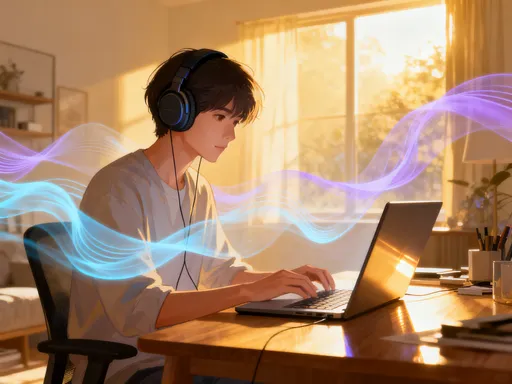
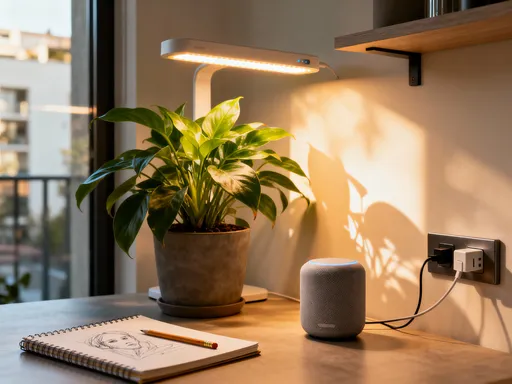
That’s when I realized: if energy shapes behavior, then controlling energy could shape better habits. I didn’t need more motivation—I needed better conditions. So I started small. I replaced a regular outlet with a smart plug. I programmed it to turn on a floor lamp at 7 a.m. every morning. No more fumbling for switches. No more “I’ll do it later.” The light came on, and it felt like a gentle nudge: “It’s time.” I added a smart fan that turned on at the same time. Then a speaker that played soft music. These weren’t grand changes, but they created a ritual. The room began to wake up before I did, and suddenly, moving felt like the natural next step.
Science backs this up—our brains respond to environmental cues. A consistent trigger, like bright light or familiar music, signals the body to shift into action. I wasn’t fighting my habits anymore. I was designing them. And electricity, something I’d always taken for granted, became the thread tying it all together.
Meet the Quiet Helper: Smart Power Strips with Scheduling Smarts
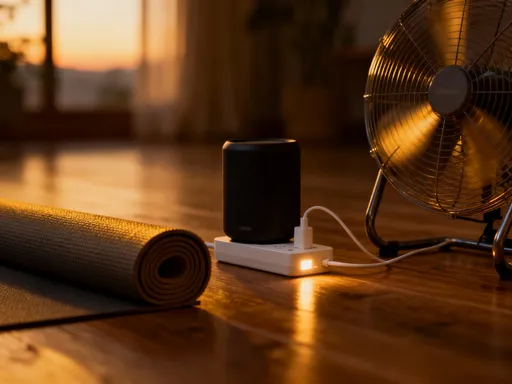
If smart plugs were the first whisper of change, the smart power strip was the game-changer. I’d been using one for my entertainment center—turning off the TV, soundbar, and gaming console with a single command. But then it hit me: why not use it for fitness? I moved it to my living room, where my treadmill and resistance bands live, and connected everything—treadmill, fan, speaker, even the lamp. Now, instead of managing each device separately, I could control them all at once.
The real magic? Scheduling. I programmed the strip to turn on at 7:15 every morning. At that time, the fan starts, the lights brighten, the speaker plays a calming playlist, and the treadmill powers up with a soft beep. It’s not loud or demanding—just present. That sound, that glow, that breeze—it’s my invitation to move. And because everything is ready, there’s no excuse. I don’t have to decide. I don’t have to prep. The space is already set.
At the same time, the strip turns off anything that might distract me—my tablet, which was previously charging nearby, now only charges at night. The TV? It’s off by default in the morning. This isn’t about punishment—it’s about priority. When your environment makes the healthy choice the easiest one, you’re far more likely to follow through. I remember one morning, I was still half-asleep, and I heard the fan turn on. I groaned, rolled over… and then stood up. My body knew what came next. The routine had become automatic.
Setting it up was simple. I downloaded the app, connected the strip to my Wi-Fi, and created a schedule. No tech degree needed. Within ten minutes, I had a fitness-ready space every morning. And the best part? It works whether I’m feeling energetic or not. On low-motivation days, it’s the difference between skipping and showing up.
Building a "Fitness-Ready" Environment Without Thinking
One of the biggest myths about fitness is that it requires constant effort. But the truth is, lasting change comes from reducing effort. The less you have to think, the more likely you are to act. That’s the power of automation. When your environment is designed to support your goals, you don’t need motivation—you just need to show up.
My smart power strip does more than power devices—it creates a ritual. At 7:15, the room transforms. The air moves. The light shifts. Music fills the space. These aren’t random changes—they’re cues. And over time, my body began to respond to them like clockwork. Just like how the smell of coffee tells you it’s morning, these sensory signals tell me it’s time to move. I don’t have to debate with myself. I don’t have to “find the time.” The time finds me.
I started with a 10-minute stretch routine—nothing intense, just enough to wake up my body. But because it happened in the same space, at the same time, with the same setup, it stuck. Within weeks, I was adding short walks on the treadmill, then light strength training. The consistency wasn’t because I suddenly had more willpower. It was because the friction was gone. The decision was made for me. All I had to do was step in.
This isn’t just about fitness—it’s about how we design our lives. We accept so much mental load: remembering to turn things on, deciding when to act, fighting distractions. But what if we could offload some of that? What if our homes could take care of the small stuff so we could focus on what matters? That’s what this setup gave me: mental space. And in that space, healthy habits had room to grow.
Saving Energy While Supporting Health: A Win-Win at Home
One unexpected benefit of this system? My electric bill went down. I hadn’t set out to save energy—I just wanted to move more. But by scheduling devices to turn on only when needed and shutting off idle electronics, I was also reducing waste. The treadmill wasn’t drawing power all day. The fan wasn’t running overnight. The speaker wasn’t left on by accident.
I started tracking my usage through the app, and the difference was clear. In the first month, my living room energy consumption dropped by nearly 30%. That’s not just good for my wallet—it’s good for my peace of mind. There’s something deeply satisfying about knowing you’re not wasting resources. It feels responsible. It feels intentional.
But beyond the numbers, I noticed a shift in how my home felt. When devices aren’t humming in the background, when lights aren’t left on for no reason, the space feels calmer. There’s less mental noise. I wasn’t just saving energy—I was creating a quieter, more focused environment. And that calm made it easier to choose movement over scrolling, stretching over sitting.
It’s a small thing, but it matters. When your home feels cluttered—physically or energetically—it’s hard to feel clear inside. But when your space is mindful, so are you. I began to see energy not just as a utility, but as a reflection of my choices. And when those choices aligned with my values—health, simplicity, care—I felt more in control of my life.
From Solo Gains to Family Flow: Encouraging Movement Together
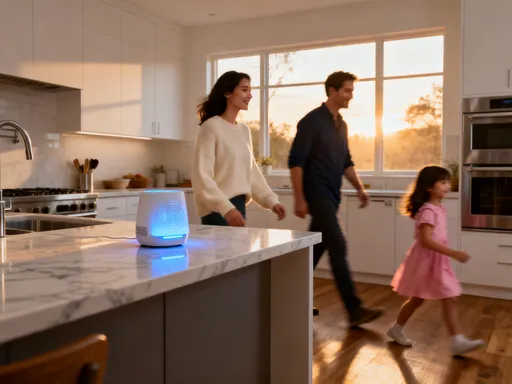
Change doesn’t happen in isolation. Even small shifts ripple out. I didn’t set out to get my partner moving, but it happened anyway. He’d see me stretching in the morning, hear the music, notice the space was ready. At first, he’d smile and say, “Looks like someone’s on a roll.” Then one day, he grabbed a resistance band and joined me. No big announcement. No pressure. Just presence.
We started building little rituals together. In the evenings, the smart strip turns off the TV at 8:30—our signal that it’s time to wind down. Instead of scrolling, we began doing a short stretch routine. Sometimes it’s five minutes. Sometimes it’s ten. But it’s consistent. And it’s ours. The strip doesn’t just manage power—it manages transitions. It tells us when to shift from work to rest, from screen time to connection.
What I love most is that it didn’t require a conversation about fitness. We didn’t have to “decide” to be healthier. The environment did the nudging. The routine did the inviting. And because it felt easy, we kept coming back. Now, when the lights dim and the TV shuts off, we both know what’s next. We don’t fight it—we flow with it. And in those quiet moments, we’re not just moving our bodies. We’re reconnecting.
It’s proof that wellness isn’t just individual. It’s shared. And when your home supports healthy habits, it lifts everyone in it. I didn’t just build a fitness routine—I built a family rhythm.
More Than Fitness: How Control Over Energy Brought Control Over Life
This journey started with a simple goal: move more. But it became something bigger. It became about feeling capable. About creating a life that supports you, not one you’re constantly fighting against. And the surprising truth? It began with something as ordinary as a power strip.
Gaining control over my home’s energy gave me a sense of agency I hadn’t realized I was missing. When I could shape my environment to support my goals, I felt more confident in my ability to shape other parts of my life. If I could make movement easier, what else could I simplify? If I could reduce waste, what other areas could I make more intentional?
The confidence built slowly. At first, it was just about showing up for my 10-minute stretch. Then it was making healthier meals because I had more mental clarity. Then it was setting boundaries at work because I felt more in tune with my energy. The changes weren’t dramatic, but they were real. And they were mine.
What I’ve learned is that technology doesn’t have to be flashy to be powerful. It doesn’t have to replace human effort—it can simply support it. The smart power strip didn’t exercise for me. It didn’t motivate me. But it made it easier to choose well. It removed barriers. It created space. And in that space, I found not just fitness, but freedom.
So if you’re struggling to stay consistent, don’t just ask what you’re doing wrong. Ask what your environment is doing to help—or hurt. Look at the small systems in your home. The lights. The temperature. The devices. The energy. Because sometimes, the biggest change starts with the quietest helper.