From Dry Air to Deep Focus: How My Smart Humidifier Quietly Transformed My Learning Routine
Have you ever tried to concentrate on learning something new, only to feel distracted, tired, or just “off”? I did—until I realized the air in my home was working against me. It wasn’t just about comfort; dry air was draining my focus and energy. Then I met my smart humidifier, not as a gadget, but as a quiet partner in my daily growth. This is the story of how a simple change in my environment helped me learn better, stay centered, and move forward—without effort I didn’t expect.
The Moment I Noticed Something Was Missing
It was a quiet Tuesday evening. My kids were asleep, the house was still, and I finally had time to myself. I opened my language app, ready to practice Spanish for 20 minutes—just like I’d promised myself every week. But within five minutes, my throat felt scratchy, my eyes were dry, and my mind kept drifting to the grocery list, an old email, anything but conjugating verbs. I closed the app, frustrated. This wasn’t the first time. In fact, it had become the norm. I started to wonder: Was I just not cut out for learning at this stage of life? Was I too tired, too busy, too old?
Then one night, I stumbled on a study from a sleep and wellness research group. It mentioned that indoor air with low humidity—especially below 30%—can lead to physical discomfort that directly affects concentration. Dry nasal passages, irritated eyes, even subtle dehydration—all of these make your brain work harder just to stay awake, let alone learn. I looked at my home thermometer with a built-in humidity reader. It blinked: 28%. No wonder I felt like I was pushing through fog.
That moment shifted something in me. I realized I’d been blaming myself for lack of focus when the real issue was invisible. My environment wasn’t supporting me. I wasn’t failing at learning—I was trying to do it in conditions that made it harder. And if something as simple as air moisture could make such a difference, maybe the solution wasn’t more willpower. Maybe it was smarter support.
Finding a Helper, Not a Gadget
I’ll be honest—I wasn’t excited about adding another device to my life. My kitchen counter already had a coffee maker, a blender, and a smart speaker I barely used. The last thing I needed was another blinking box that promised to change my life but ended up collecting dust. So when I started looking into humidifiers, I wasn’t searching for something flashy. I wanted something quiet, reliable, and—most importantly—thoughtful.
That’s when I discovered smart humidifiers. Not the old-school kind that you fill up and forget, hoping it doesn’t over-humidify your room. This one connected to my home Wi-Fi and had sensors that measured real-time humidity. It could adjust itself based on the room’s conditions. Even better, it learned my routine. If I usually studied in the evening, it would gently raise the moisture level 15 minutes before, so the air was just right when I sat down.
What sold me wasn’t the tech specs—it was how it felt like it was paying attention. It didn’t need me to micromanage it. I didn’t have to wake up and check levels or remember to turn it on. It just… knew. And that made all the difference. I didn’t feel like I was using a machine. I felt like I had a quiet ally in my corner, one that cared about my comfort and focus as much as I did.
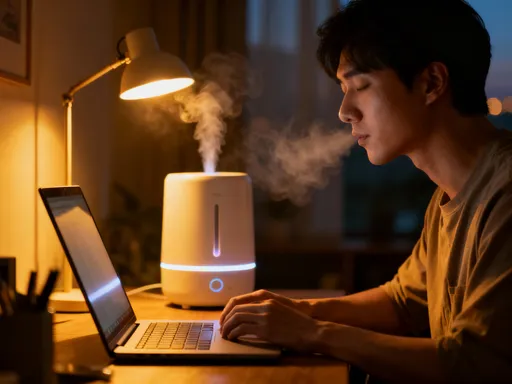
Setting it up was surprisingly simple. I downloaded the app, connected it to my home network, and placed it in my small study nook—the same spot where I’d sit with my tablet and notebook. The first night it ran, I noticed how quiet it was. No loud hums, no disruptive clicks. Just a soft mist, barely visible, doing its job without demanding attention. And for the first time in weeks, I made it through a full 20-minute lesson without pausing to rub my eyes or clear my throat.
Linking Air Quality to Personal Growth
We live in a world where we track everything—our steps, our water intake, even how many hours we spend looking at screens. But how often do we think about the quality of the air we breathe at home? I certainly didn’t. I assumed if I wasn’t coughing or sneezing, the air must be fine. But this experience taught me that wellness isn’t just about the obvious signs. It’s also about the subtle, invisible things that shape how we feel and think every day.
Once I started using the humidifier regularly, I began to notice changes that went beyond physical comfort. My mind felt clearer. I could read a page without rereading it twice. I retained new vocabulary more easily. I didn’t feel that low-grade mental fatigue that used to hit me by 8 p.m. It was as if my brain had more bandwidth—like upgrading from a slow internet connection to a smooth, reliable one.
I started to see my humidifier not just as a home appliance, but as part of my personal growth toolkit. Just like I invest in books, courses, and quiet time, I realized I needed to invest in the environment where I do that work. Because no matter how motivated I am, if my body is uncomfortable, my mind won’t follow. Dry air was like background noise—always there, always distracting. Now, with balanced humidity, that noise was gone. And in the silence, I could finally hear my own thoughts.
It reminded me of something a friend once told me: “You can’t pour from an empty cup.” But I’d add: you also can’t think clearly in an unsupportive space. Our homes should be more than shelters. They should be places that nurture our minds as much as our bodies. And sometimes, that starts with something as simple as the air around us.
Learning with Support, Not Struggle
Before the humidifier, my learning sessions felt like uphill battles. I’d sit down, determined, but within minutes, I’d feel restless. My skin would feel tight, my throat dry, and my concentration would slip. I’d end up closing the app, telling myself I’d try again tomorrow. And tomorrow would be the same. It wasn’t that I didn’t care about learning. I did. But the conditions weren’t right. It was like trying to plant seeds in cracked, dry soil—nothing would grow, no matter how much effort I put in.
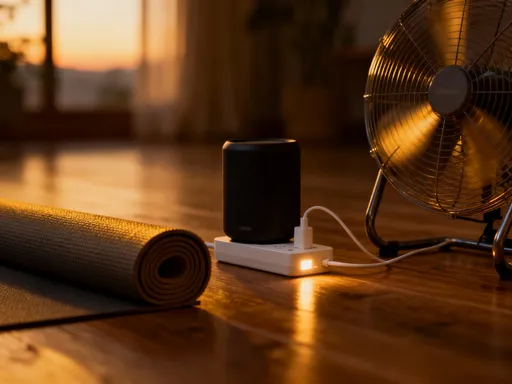
Now, everything feels different. My learning space feels *ready*. The air is soft, my breathing is easier, and my body feels at ease. The humidifier runs quietly in the background, maintaining that sweet spot of 40–50% humidity—the range experts say is ideal for both comfort and cognitive function. I’ve even synced it with my morning routine. When my smart speaker says, “Good morning, it’s time for your language lesson,” the humidifier automatically adjusts to optimize the air.
This small alignment makes a big difference. I don’t have to think about it. I don’t have to prepare. I just show up, and the space is already supporting me. It’s not the humidifier teaching me Spanish—it’s creating the conditions where I can teach myself. And that’s a powerful shift. Instead of fighting my environment, I’m working with it. Instead of feeling guilty for giving up, I feel capable. I finish lessons. I remember words. I even catch myself thinking in Spanish while folding laundry.
One evening, my daughter walked into the room and said, “Mom, your machine makes the air feel like a hug.” I laughed, but she was right. There’s a softness now, a coziness that wasn’t there before. And that warmth isn’t just physical—it’s emotional. When your body feels cared for, your mind opens up. You’re more patient, more present, more willing to try. And that’s exactly what learning requires.
Tracking Progress Beyond Numbers
One of the most surprising features of my smart humidifier is its ability to track patterns over time. The app shows me a simple graph of humidity levels throughout the day. At first, I just glanced at it out of curiosity. But then I started to see trends. Every evening, around 7 p.m., the humidity would drop sharply—exactly when I tried to study. No wonder I felt foggy. My brain wasn’t failing me; the air was.
Now, I use that data not to obsess, but to understand. I can see when my focus hours align with optimal air quality. On days when the humidity stays steady, I’m more consistent with my lessons. On days when it dips, I notice I’m more likely to skip them. It’s not about blaming the air—it’s about recognizing the connection. And once you see it, you can work with it.
I’ve started adjusting my schedule based on this insight. If I know the air tends to dry out in the evening, I try to do my learning earlier in the day. Or I let the humidifier pre-condition the room. It’s a small change, but it’s made my routine more realistic and sustainable. I’m not fighting my natural rhythms or my home environment. I’m designing around them.
And here’s the thing: progress isn’t just measured in fluency or test scores. It’s also in consistency, in showing up, in feeling capable. The humidifier doesn’t give me motivation—but it removes one more barrier to it. And sometimes, that’s all we need. A little less friction. A little more support. A space that says, “You’ve got this,” before you even begin.
A Calmer Home, A Clearer Mind
The benefits didn’t stop with me. My whole family started to feel the difference. My youngest, who used to wake up with a dry cough during winter, stopped waking up at night. My husband said he was sleeping more deeply. Even our dog seemed to spend more time lounging in the living room, where the humidifier runs during the day.
But beyond the physical improvements, something else shifted—a sense of calm. With less irritation from dry air, we were all a little more relaxed. There were fewer “I don’t feel good” moments, fewer small discomforts that pile up and wear you down. And that calm filtered into my own mind. When the people around me are at ease, I can be more present. I’m not distracted by worries or minor crises. I can focus on what matters—like learning, growing, or just enjoying a quiet moment with a book.
Our home started to feel like a true sanctuary. Not because we redecorated or bought new furniture, but because the air itself felt kinder. It was softer, gentler, more inviting. And in that atmosphere, I found it easier to be kind to myself, too. I wasn’t rushing. I wasn’t forcing. I was allowing myself to learn at my own pace, in a space that supported me.
That’s when I realized: self-improvement doesn’t have to be loud or dramatic. It can be quiet. It can be as simple as breathing easier. And when your home supports your well-being, it becomes a foundation for everything else—your goals, your dreams, your daily growth.
Small Tech, Big Shift: Building a Life That Supports You
This journey with my smart humidifier taught me something deeper than better air quality. It taught me that lasting change doesn’t always come from pushing harder. Sometimes, it comes from designing a life that makes growth easier. We talk so much about discipline, about grinding through the hard parts. But what if we spent more time removing the obstacles? What if we built environments that helped us succeed without constant effort?
My humidifier is a small device. It doesn’t look impressive on a shelf. It doesn’t have a flashy screen or a long list of features. But it represents a shift in mindset—one where technology isn’t about upgrading gadgets, but about upgrading living. It’s about using tools that understand our lives, that adapt to us, that work quietly in the background so we can focus on what matters.
And for me, what matters is growing—not just in skills, but in peace, in presence, in joy. I want to learn new things not because I have to, but because I can. I want to feel capable, not drained. And now, I do. Not because I’ve changed who I am, but because my environment has changed to support who I’m becoming.
So if you’ve ever felt like you’re trying your best but still falling short, I want to ask you: what’s your environment doing to help—or hold you back? Is the air in your home dry? Is your study space uncomfortable? Are there small, invisible things making your goals harder than they need to be?
You don’t need a perfect routine or superhuman willpower. You might just need a little more support—something quiet, consistent, and thoughtful. Something that says, “I’ve got you.” Because when your space supports you, growth isn’t a struggle. It’s a natural part of your day. And that, to me, is the real promise of smart technology—not to impress, but to empower. Not to complicate, but to care. One breath, one lesson, one quiet moment at a time.