From Screen Fatigue to Creative Flow: How Online Painting Gave My Schedule a Second Wind
You know that feeling when your to-do list is endless, your energy is low, and the only thing glowing at the end of the day is your phone screen? I was stuck in that loop—until I accidentally opened an online painting app during a work break. What started as a five-minute escape became a daily ritual that didn’t just calm my mind, but quietly reshaped my entire schedule. This isn’t about becoming an artist. It’s about how a little creative play can make your time feel lighter, fuller, and more yours.
The Burnout That No Calendar Could Fix
For years, I believed productivity was the answer to everything. I lived by color-coded calendars, daily checklists, and hourly reminders that chimed like tiny judges. If it was on the list, I did it. And yet, no matter how many boxes I checked, I never felt accomplished—just exhausted. My energy dipped by 3 p.m., my workouts became something I scheduled but rarely completed, and even my downtime felt like another chore. I’d sit on the couch with a cup of tea, scrolling through social media or watching the same shows over and over, only to stand up feeling more drained than when I sat down.
That’s when it hit me: I was consuming all day long—emails, messages, videos, news—but I wasn’t creating anything. Not even a grocery list with flair. My brain was running on digital input overload with zero emotional output. It wasn’t that I lacked time; it was that my time lacked meaning. Resting wasn’t enough. I needed something that engaged me in a different way—something that didn’t feel like work, but still made me feel alive. I wasn’t looking for another self-improvement hack. I was looking for a spark. And honestly? I didn’t expect to find it behind a paintbrush—especially a digital one.
What I’ve learned since is this: burnout isn’t just about doing too much. It’s about doing too much of the wrong kind of thing. When every activity is goal-driven—finish the report, pack the lunches, reply to the texts—your mind never gets to wander, play, or simply be. And without that mental breathing room, even small tasks feel heavy. I needed a reset button, not another app that promised to organize my chaos. I needed a moment of soft focus, a place where I could show up without performing. What I found wasn’t in a meditation retreat or a weekend getaway. It was hiding in plain sight, in the very device I blamed for my fatigue.
A Happy Accident: Discovering Online Painting Platforms
It happened on a Tuesday. I was avoiding a difficult email, scrolling mindlessly when a friend posted a bright, dreamy watercolor-style image with the caption, “Painted this in 10 minutes during lunch. So calming!” I clicked the link, curious. It led to a popular online painting platform—simple, intuitive, and free to start. On a whim, I downloaded the app. No expectations. No plan. Just five minutes to stall before getting back to work.
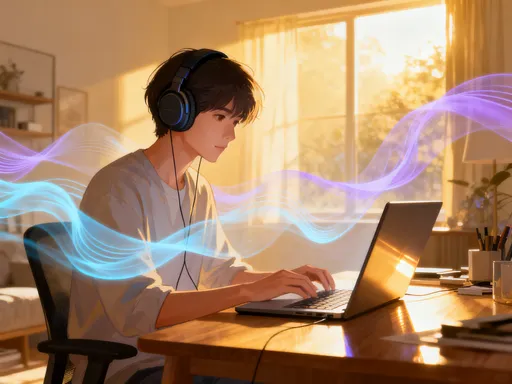
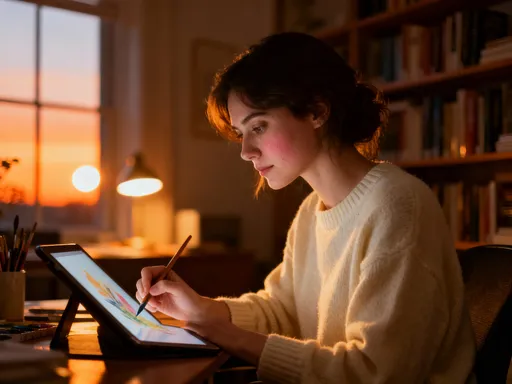
Within seconds, I was swiping my finger across the screen, choosing colors, experimenting with brush sizes. I made a wobbly blue circle, then layered soft pink over it. It looked nothing like a professional piece—more like a child’s doodle. And yet, I couldn’t stop smiling. There was something deeply satisfying about seeing my gesture become color, about watching a blank screen slowly fill with something made by me. I wasn’t thinking about my to-do list, my inbox, or the meeting later that day. I wasn’t even thinking about time. I was just… there.
That five-minute break stretched to ten, then fifteen. When the timer on my phone buzzed, I felt a surprising reluctance to stop. My shoulders had dropped from their usual ear-level perch. My breathing had slowed. And for the first time in weeks, my mind wasn’t racing ahead to the next task. It was focused on a single, simple thing: the joy of making a mark and seeing what happened next. I didn’t realize it then, but I had just stepped into what psychologists call a “flow state”—a mental zone where time dissolves and attention is fully absorbed. And the best part? It wasn’t forced. It happened naturally, because I was playing.
Unlike other digital activities, online painting didn’t leave me feeling drained. It didn’t feed my anxiety or pull me into endless comparison. It gave me space. I wasn’t consuming someone else’s content—I was creating my own. And in that shift, from passive viewer to active maker, something quietly began to change in me. I started wondering: what if I did this every day? Not for hours. Not to become an artist. Just to feel that sense of presence again.
Why Painting Works Where Workouts and Meditation Fell Short
I’ll be honest—I’ve tried the usual fixes. I’ve rolled out the yoga mat at 6 a.m., tracked my steps like a detective, and followed guided meditations with my eyes closed and my mind wide open. Some days, they helped. But consistency? That was another story. Yoga felt like another item on the list. Step counting turned into a numbers game. And meditation? I appreciated the intention, but sitting still with my thoughts often meant wrestling with to-do lists and unresolved conversations. I wanted peace, but my brain kept handing me receipts.
Painting, though, was different. It didn’t ask me to clear my mind. It asked me to use it—gently. The act of choosing colors, blending shades, and guiding the brush across the screen created a rhythm that was both engaging and calming. My hands were busy, my eyes focused, and my thoughts—slowly—let go. It wasn’t about silencing my mind. It was about giving it something soothing to do.
What I didn’t know at the time was that this experience has real science behind it. Researchers have found that creative activities like drawing, painting, and crafting can reduce cortisol levels—the hormone linked to stress. They also activate the brain’s reward system, releasing dopamine in a natural, sustainable way. Unlike the quick dopamine hit from a social media like or a text notification, creative flow offers a deeper, longer-lasting sense of satisfaction. It’s not a distraction. It’s a reset.
But beyond the biology, there’s something emotional about making art—even simple digital art. It’s permission to be imperfect. To try something and let it be messy. To create something just because it feels good, not because it has to be shared, saved, or praised. In a world that measures worth by output and efficiency, painting reminded me that not everything has to be useful to be valuable. Sometimes, the most productive thing you can do is something that feels like play.
How Creativity Became My Secret Time-Management Tool
Here’s the irony: I started painting to escape my schedule, but it ended up improving it. After just a few days of 10–15 minute painting breaks, I noticed changes in how I worked. I was more focused during meetings. I made fewer typos in emails. I stopped rereading the same paragraph three times because my mind had wandered. My energy didn’t crash in the afternoon the way it used to. And for the first time in months, I was finishing tasks early—without rushing.
It wasn’t magic. It was momentum. Creative breaks acted like mental oil, smoothing out the friction in my day. Instead of pushing through fatigue, I was recharging in real time. I began scheduling these moments intentionally—not as rewards, but as essential parts of my routine. I called them “creative resets.” I’d take one after a heavy work session, between errands, or right after my workout. It became as non-negotiable as brushing my teeth.
What surprised me most was how these short bursts of creativity made me more efficient, not less. I used to think that taking time away from work meant falling behind. But the opposite was true. When I gave my brain a chance to engage differently, it came back sharper. I solved problems faster. I made decisions with more clarity. And I stopped feeling like I was constantly playing catch-up. My calendar didn’t change—but my relationship with it did. It stopped feeling like a prison of obligations and started feeling like a flexible guide. I wasn’t just managing time anymore. I was nurturing my energy, and that made all the difference.
If you’re thinking, “I don’t have 15 minutes,” I get it. But consider this: what if those 15 minutes saved you 45 minutes of distracted, low-energy work? What if a little creative play helped you finish your tasks with less stress and more ease? That’s the quiet power of creative flow. It doesn’t add time to your day. It transforms the time you already have.
Building a Routine That Actually Sticks
I won’t pretend it was easy at first. My early attempts were inconsistent. I’d paint when I felt “inspired”—which, as it turns out, is a rare mood for busy women juggling work, family, and a thousand small demands. Some days, I’d skip it because I was tired. Other days, I’d tell myself I’d do it “later,” knowing full well that later never came.
The shift happened when I stopped waiting for motivation and started treating painting like a micro-habit—something small, simple, and repeatable. I attached it to things I was already doing: after my morning coffee, during my lunch break, or as part of my evening wind-down. I didn’t aim for masterpieces. I aimed for consistency. Ten minutes. One session. Just show up.
I also made sure the experience was as low-pressure as possible. I chose platforms with beginner-friendly tools, soothing color palettes, and guided prompts like “Paint a quiet forest” or “Create a sky at sunset.” Some apps even offer gentle background music or nature sounds, which helped me transition from “doing mode” to “creating mode.” I turned off notifications. I didn’t share my work. This wasn’t about performance. It was about presence.
Over time, something shifted. The habit stuck because it didn’t feel like a chore. It felt like a gift. And the more I showed up, the more I looked forward to it. It became my daily pause—a moment where I wasn’t responsible for anything except making a mark and seeing where it led. I didn’t need talent. I didn’t need experience. I just needed to be willing to play. And in that willingness, I found a surprising kind of strength.
Real-Life Shifts: More Than Just Pretty Pictures
The changes didn’t stay on the screen. They spilled into my life in ways I didn’t expect. I started sleeping better. My mind wasn’t racing at bedtime the way it used to. I felt calmer during the day, which made my workouts feel more enjoyable and less like obligations. I even started tackling creative projects at work—presentations, reports, planning—with more confidence and less dread.
But the biggest shift was emotional. I was less reactive. Less short-tempered when things didn’t go as planned. My family noticed. My partner said I seemed “lighter.” My kids said I smiled more. And one evening, as I was painting a silly digital flower, my youngest climbed onto the couch and asked, “Can I try?”
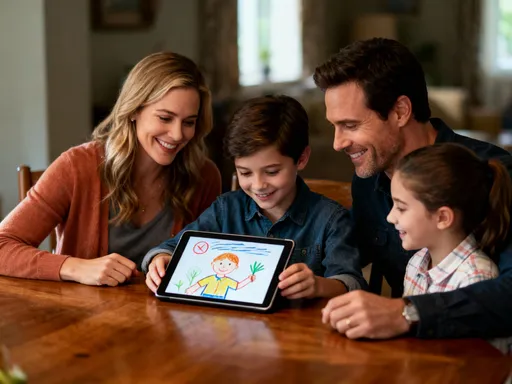
We spent the next hour making digital doodles together—rainbow cats, lopsided hearts, a tree with purple leaves. We laughed. We took turns. We didn’t care how it looked. In that moment, the app wasn’t just a tool for me. It became a bridge—to my child, to joy, to connection. It reminded me that technology doesn’t have to pull us apart. It can bring us together, as long as we use it with intention.
That night, I realized something important: creativity isn’t just a solo act. It’s a way of being. When we make space for small moments of play, we become more present, more patient, more ourselves. And that ripples out into everything—our work, our relationships, our sense of well-being. We don’t have to choose between productivity and peace. We can have both, when we let ourselves create.
Your Turn: Start Small, Start Now
If you’re reading this and thinking, “I’m not creative,” I’m going to gently challenge that belief. Creativity isn’t about talent. It’s about curiosity. It’s about being willing to try, to explore, to make a mark and see what happens. You don’t need hours. You don’t need supplies. You don’t need an art degree. You just need a device you already own and five minutes to spare.
Start simple. Search for a beginner-friendly online painting app—look for one with intuitive tools, calming themes, and guided sessions. Try a 5-minute session during your lunch break. Paint a circle. Fill it with color. Add a line. See how it feels. Notice your breath. Notice your shoulders. Notice if your mind slows down, even just a little.
Don’t worry about the outcome. No one has to see it. This isn’t about creating art for others. It’s about creating space for yourself. And in that space, you might just find what you’ve been missing: a sense of calm, a spark of joy, a moment where you feel fully present.
Let go of the idea that creativity is a luxury. It’s not. It’s a necessity. Just like sleep, movement, and connection, creative expression is part of what keeps us emotionally balanced and mentally resilient. When we feed that part of ourselves, we don’t waste time—we reclaim it. We stop running through our days and start living them.
So go ahead. Open that app. Tap the screen. Make your first stroke. You don’t have to be good. You just have to begin. Because every great journey starts with a single brushstroke. And who knows? That small act of play might just be the thing that gives your schedule—and your spirit—a second wind.