After testing 12 map apps, this one finally made my daily walks smarter and more enjoyable
Remember that feeling of stepping outside, phone in hand, hoping your walk turns into something more than just steps? I did too—until I found a navigation app that didn’t just guide me, but helped me learn, move, and grow. It wasn’t about fancy tech, but how it quietly fit into my life, turning ordinary moments into small wins. That’s what changed everything. What started as a simple way to avoid getting lost became a daily ritual of discovery, clarity, and quiet joy. And honestly, I didn’t see it coming. I’m not a tech expert. I’m someone who walks to clear my head, to stretch my legs, and sometimes, just to feel like I’ve done one good thing that day. But this app—this quiet little helper—changed how I move through the world. And I think it can do the same for you.
The Walk That Changed My Mind
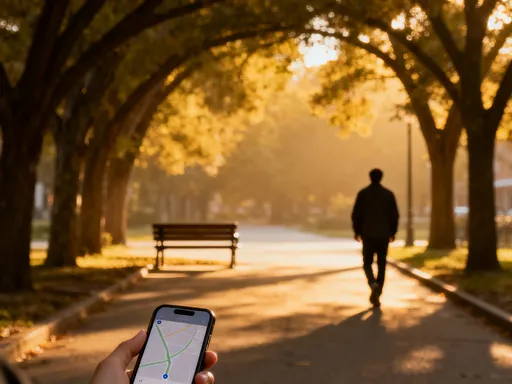
I used to think map apps were only for drivers or tourists. My daily walks were just routine—something I did after dropping the kids, during lunch breaks, or when I needed a break from the house. No destination, no plan. Just movement. Then one rainy afternoon, I took a wrong turn and ended up somewhere unfamiliar. The streets looked different—older homes with big trees, a small playground tucked between two buildings, a bakery with a red awning I’d never seen. I pulled out my phone, a little annoyed, ready to retrace my steps. But instead of just showing me the way back, the app said, “You’re near Maplewood Park. Want to explore?”
I clicked yes, not really thinking. And suddenly, the screen lit up with a soft green path looping through the park, showing walking time, elevation, even a note: “Benches available near the pond.” As I followed it, I noticed things—the sound of birds under the trees, the smell of wet grass, the way sunlight broke through the clouds. When I got home, the app showed I’d walked 47 minutes, burned 210 calories, and passed three new points of interest. But more than that, I felt… lighter. Curious. Like I hadn’t just walked—I’d discovered something.
That moment sparked a question: what if technology could do more than just get me from point A to point B? What if it could help me pay attention? What if it could turn a habit into a practice—one that supports my body, my mind, and even my mood? I didn’t need a fitness revolution. I needed something gentle, something that worked with my life, not against it. And that rainy-day detour made me realize: maybe the right app wasn’t about speed or data—it was about presence.
From Directions to Daily Growth
Map apps are no longer just about navigation. At least, not for me. What began as a tool to avoid wrong turns has quietly become part of my personal growth routine. Every morning, after the coffee is poured and the house settles, I step outside with my phone in my pocket. I don’t always know where I’m going—but the app does. It suggests routes based on my mood, time, and energy. Some days it’s a short loop around the neighborhood. Other days, it’s a longer trail through the woods or along the river. But every walk now has a purpose, even if that purpose is simply to breathe.
The app tracks my pace, not to judge me, but to help me notice patterns. On stressful days, I walk faster, almost rushing. On calmer days, I slow down, pausing to watch a squirrel or admire a garden. The app doesn’t scold me—it just shows me. And over time, I started using that feedback. If I’m feeling overwhelmed, I choose a route with more trees and fewer cars. If I need energy, I pick one with gentle hills. It’s not about performance. It’s about tuning in.
And here’s what surprised me: consistency grew naturally. I didn’t set a step goal or sign up for a challenge. I just kept walking, because it felt good. The app celebrated small things—“You’ve walked this route five times!” or “Nice job sticking with it this week.” No pressure. No guilt. Just gentle encouragement. I started sleeping better. My back pain improved. And I found myself looking forward to those quiet 30 minutes, not as a chore, but as a gift. The app didn’t change my body first—it changed my mindset. And that made all the difference.
Learning While Moving: Knowledge That Fits Your Pace
One of the biggest surprises? How easily learning can blend with motion. I’ve always loved books and podcasts, but sometimes, sitting still to listen feels like another task on the list. Then I discovered a feature in the app that shares fun facts based on where I’m walking. It’s not constant—it doesn’t talk over my thoughts. But every few minutes, if I’m near something interesting, it chimes in softly: “The house on your left was built in 1923 by a schoolteacher who planted these tulips every spring.”
Walking past an old church? It tells me about the stained glass windows. Passing a community garden? It names the plants and shares a tip: “Lavender attracts bees and calms the nervous system.” I’m not memorizing everything, but I’m absorbing it. And when I walk the same route again, I notice things differently. That tree isn’t just a tree—it’s a sugar maple, and in the fall, its leaves turn brilliant red. That bench isn’t just a place to rest—it’s where a local artist once painted a mural that’s now gone, but remembered.
My daughter noticed the change. “Mom, you’re always telling me cool stuff now,” she said one evening. I laughed, but it was true. I wasn’t trying to become a walking encyclopedia. I was just moving through the world with more curiosity. And the app was helping me see what I’d once overlooked. It wasn’t just teaching me about my neighborhood—it was teaching me how to pay attention. And that, I’ve realized, is one of the most valuable skills we can have, especially as we get older. Our lives get busy. Our minds get crowded. But when I’m walking and learning at the same time, I feel sharp. Alive. Like I’m not just going through the motions—I’m part of the story.
How the Right App Understands Your Life, Not Just Your Location
Not all map apps do this. I tested over a dozen—some felt like they were shouting at me with too much data, others were slow or glitchy. One kept rerouting me through construction zones. Another had a voice that sounded annoyed, like I was bothering it by asking for directions. But the one I kept came down to one thing: it felt like it knew me.
It adapts. If I start a walk at 7 a.m., it assumes I want something energizing—maybe a route with a view or a bit of elevation. If I start at 6 p.m., after a long day, it suggests flat, quiet streets with lots of shade. If it’s raining, it shortens the route or moves it closer to home. If it’s sunny and warm, it highlights parks, fountains, or outdoor art. It even checks the air quality and reminds me to wear a hat if UV levels are high. It’s not overbearing—it’s thoughtful.
And it remembers the little things. My favorite coffee shop? It knows. When I’m within two blocks, it gently says, “Want to stop for a latte?” Not every time. Just sometimes. Like a friend checking in. I’ve started saving routes with names like “Sunday Peace Walk” or “Post-Argument Reset.” The app doesn’t judge. It just holds the space. I can share them with my sister, who lives two hours away. Last month, she visited and said, “I walked your ‘Morning Light’ route this morning. It was beautiful.” We didn’t plan it. But for a few minutes, we were in the same place, even if not at the same time.
That’s the magic. It’s not just mapping my location—it’s mapping my life. My rhythms. My moods. My quiet joys. And in doing so, it makes me feel seen. Not in a creepy, “I’m being watched” way—but in a “someone gets it” kind of way. And honestly, isn’t that what we all want? To feel understood, even by the tools we use every day?
Making Fitness Feel Effortless, Not Forced
I’ll be honest—I never liked fitness trackers. The constant counting, the red rings, the pressure to “close your move goal.” It made me feel guilty if I sat too long or skipped a day. And the heart rate alerts? “Your heart is working too hard!” No, I’m just climbing the stairs. Calm down. I didn’t want a drill sergeant in my pocket. I wanted something kinder.
This app changed that. It doesn’t focus on intensity. It doesn’t nag me to run or jump. Instead, it celebrates exploration. It gives little badges—not for steps, but for things like “First time on Oak Lane” or “Walked in the rain” or “Visited three new parks this month.” It’s playful. Human. And because of that, I’ve become more active without feeling like I’m “exercising.”
My stamina has improved. I can walk farther without getting winded. My shoulders don’t ache as much. I sleep deeper. And my mood? Noticeably better. But the best part is that it happened slowly, naturally. I didn’t force it. I just showed up, and the app made it easy to keep going. It’s like the difference between being pushed and being invited. One feels like work. The other feels like a choice. And when something feels like a choice, you’re more likely to stick with it.
I’ve also started walking with more awareness. The app shows my average pace over time, and I’ve learned to match my speed to my mood. On tough days, I go slower. On joyful ones, I pick up the pace. It’s not about performance—it’s about harmony. And that shift—from striving to being—has made all the difference. Fitness isn’t just about the body. It’s about the mind, the heart, the spirit. And this app helps me care for all of it, one step at a time.
Sharing the Journey: Connection Without Screens
Here’s the unexpected part: this app brought me closer to people. I started sharing routes with a friend who also walks to clear her head. We don’t text much during the day—life gets busy. But we exchange trails. “You’ll love this quiet street with cherry trees,” I messaged her last spring. A few days later, she wrote back: “I walked it. Felt like a poem.” We didn’t walk together, but we shared the experience. And that meant something.
My sister used one of my saved routes when she visited last summer. She walked my “Sunset Loop” and sent me a photo of the sky turning pink over the river. “You were right,” she said. “This is peaceful.” I didn’t design the route for her. But in a way, I was walking with her—through memory, through care, through a simple act of sharing.
Even my teenage nephew got into it. He’s not big on walks, but he likes discovering hidden spots. I showed him how to save a route with a surprise at the end—a mural, a tiny library, a bench with the best view. Now he sends me his own creations. “Try this one after work,” he said last week. I did. It ended at a little ice cream stand I’d never noticed. We didn’t talk much when I saw him next, but I thanked him. He smiled. “Glad you liked it.”
These moments aren’t grand. But they’re meaningful. In a world where connection often happens through screens, this is different. We’re not staring at phones together—we’re using them to step away from screens and into the world. We’re sharing space, even when we’re apart. And that, I’ve realized, is a quiet kind of love. It says: I see you. I know what brings you peace. And I want you to have it too.
Why This Isn’t Just About Technology—It’s About Living Better
At its core, this isn’t about apps or maps. It’s about designing a life where growth feels easy, where learning fits into daily rhythms, and where movement becomes a source of joy, not obligation. The right technology doesn’t shout. It whispers. It supports, guides, and occasionally surprises us. It doesn’t demand our attention—it earns it by being useful, kind, and quietly present.
And sometimes, it turns a simple walk into a moment of clarity, discovery, and peace. That’s the kind of tech we all need—quiet, kind, and deeply human. It’s not about replacing real life. It’s about enhancing it. Helping us notice what we’ve missed. Encouraging us to keep going, even on hard days. Reminding us that small things—like a new path, a fun fact, a saved route—can add up to something meaningful.
I still walk for the same reasons: to move, to think, to breathe. But now, I walk with more awareness. More curiosity. More connection. And I’m not just getting from one place to another—I’m becoming someone who notices, who learns, who cares. That’s not something any app can claim to do. But the right one can help. It can be the quiet companion that walks beside you, not leading, not pushing, but simply saying: “You’re doing great. Keep going.” And sometimes, that’s all we need to hear.