How I Turned My Netflix Binges Into Smarter Investments
What if your weekend movie habit could actually teach you about investing? I used to see entertainment spending as pure fun—until I realized it was quietly shaping my financial mindset. By rethinking how I spend on shows, concerts, and streaming, I uncovered a surprisingly effective investment philosophy. This isn’t about cutting back—it’s about tuning in. Here’s how I shifted from mindless spending to mindful wealth-building, one streaming subscription at a time.
The Moment I Realized My Entertainment Spending Had a Hidden Cost
For years, I treated my entertainment budget like a harmless indulgence. A monthly subscription here, a concert ticket there—these were small pleasures, not financial decisions. But when I sat down to review my bank statements one quiet Sunday morning, I was stunned. What I had dismissed as background noise added up to over $300 a month—more than my car insurance, nearly as much as my grocery bill. That number didn’t just surprise me; it unsettled me. How had something so routine become so expensive without me noticing?
At first, I felt guilty. Was I being irresponsible? Was I wasting money on fleeting moments of joy? But instead of spiraling into shame, I paused and asked a different question: what was this spending really telling me? I began to see my entertainment choices not as financial failures, but as reflections of my values, emotions, and decision-making patterns. When I was stressed, I bought more concert tickets. When I was lonely, I added another streaming service “just in case.” These weren’t random acts—they were behavioral signals. And once I started paying attention, I realized this wasn’t just about money. It was about awareness.
This shift in perspective was transformative. Rather than seeing entertainment spending as the enemy of financial health, I began to view it as a diagnostic tool. It revealed my emotional triggers, my susceptibility to marketing, and my relationship with instant gratification. Most importantly, it taught me that financial discipline doesn’t start with budgets or spreadsheets—it starts with observation. By understanding where my money went and why, I laid the foundation for a more intentional approach to both spending and investing. The real cost wasn’t the $300 a month—it was the years I’d spent ignoring the lessons it could teach me.
From Passive Spending to Active Awareness: Reframing the Entertainment Budget
Entertainment spending is uniquely powerful because it’s tied to emotion. Unlike rent or utilities, which feel obligatory, buying a concert ticket or subscribing to a new app feels like a choice rooted in joy, relaxation, or self-care. That emotional connection makes it easy to justify, but also easy to overlook. I realized that much of my spending wasn’t deliberate—it was passive. I wasn’t deciding to keep each subscription; I was just not canceling it. I wasn’t choosing every event I attended; I was saying yes out of habit or fear of missing out.
To break this cycle, I started tracking every entertainment-related expense for three months. Not to restrict myself, but to understand the rhythm of my spending. I used a simple spreadsheet—no fancy apps or financial software—just dates, amounts, and a one-sentence note on why I made the purchase. Over time, patterns emerged. I noticed that my spending spiked during stressful work weeks. I subscribed to more services when I was bored at home. I bought event tickets impulsively when friends posted about concerts online. These weren’t flaws—they were insights.
Armed with this awareness, I began to spend with intention. I didn’t eliminate entertainment from my budget—I refined it. I asked myself not just “Can I afford this?” but “Do I truly want this?” and “Will this add value to my life?” This shift from passive consumption to active awareness was subtle but powerful. It mirrored the mindset needed for successful investing: observing without judgment, making choices based on values rather than impulses, and recognizing that every dollar spent is a vote for a certain kind of life. The key principle I adopted was this: **conscious allocation beats blind budgeting**. It’s not about how much you spend, but how thoughtfully you spend it. And that kind of mindfulness is transferable—whether you’re choosing a streaming service or evaluating a mutual fund.
The Unexpected Link Between Streaming Choices and Investment Habits
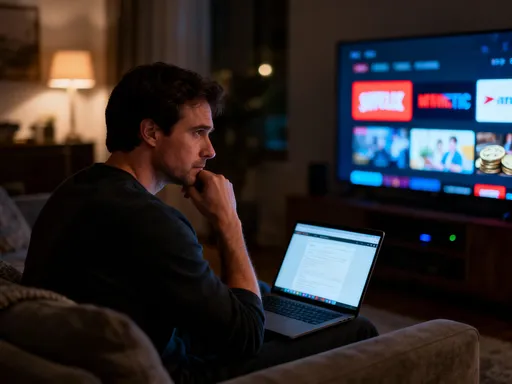
One evening, as I scrolled through a streaming platform trying to decide what to watch, it hit me: this decision wasn’t so different from choosing an investment. I was weighing options, assessing risk, and predicting outcomes—just on a much smaller scale. Would I stick with the familiar comfort of a rewatchable series—safe, predictable, low-risk, like a government bond? Or would I take a chance on an obscure foreign film with no reviews—uncertain, potentially rewarding, much like a small-cap stock?
This realization opened a new way of thinking. I began to see my entertainment choices as low-stakes practice for higher-stakes financial decisions. Trying a new genre felt like diversifying a portfolio. Skipping a viral show that everyone was talking about—because it didn’t align with my interests—felt like avoiding a hype-driven stock with no fundamentals. Even pausing a subscription after a season ended was like rebalancing my holdings based on performance.
The parallels weren’t perfect, but they were meaningful. Each small decision strengthened my ability to evaluate value, manage risk, and resist social pressure. I became more comfortable with uncertainty. I learned to trust my own preferences rather than follow the crowd. And I started to appreciate that not every opportunity needs to be seized—sometimes the best move is to wait. These are all essential skills in investing. By practicing them in the low-pressure environment of entertainment, I built confidence I could later apply to real financial choices. I wasn’t just watching TV—I was training my financial instincts, one episode at a time.
Building a Personal “Entertainment ROI” Framework
I didn’t want to stop enjoying life—I wanted to enjoy it more meaningfully. So I developed a simple mental framework to evaluate my entertainment spending: **value per dollar, not just cost**. Instead of focusing only on price, I began asking whether an experience delivered lasting value. Would this concert create memories I’d cherish for months? Would this subscription provide consistent enjoyment, or would I forget it was even active?
To test this, I started rating my experiences after they happened. On a scale of 1 to 10, how much joy did that concert bring? How often did I actually use that new app? I didn’t do this obsessively—just enough to spot trends. Over time, I noticed clear patterns. Live events with close friends scored highest. Niche streaming services with curated content often delivered more satisfaction than broad, generic platforms. Free community events—like outdoor movies or local festivals—sometimes offered more joy than expensive alternatives.
This informal ROI model changed how I spent. I became more selective, more intentional. I canceled subscriptions I rarely used. I waited for ticket prices to drop before buying. I prioritized experiences that aligned with my true interests. And here’s the surprise: I didn’t feel deprived. In fact, I enjoyed my entertainment more because I was no longer distracted by clutter or obligation. This framework didn’t just improve my spending—it prepared me for investing. When I later evaluated stocks and funds, I applied the same lens: not just “What’s the potential return?” but “Does this align with my goals? Will it add lasting value to my financial life?” That shift—from chasing returns to seeking alignment—became a cornerstone of my investment strategy.
How Small Spending Experiments Led to Bigger Financial Confidence
Confidence in money matters doesn’t come from big wins—it comes from small, repeated successes. I learned this through a series of low-risk experiments with my entertainment budget. One month, I paused all but my two most-used streaming services. I told myself I could restart them anytime. To my surprise, I didn’t miss the others. Another month, I committed to attending only free or low-cost community events. I discovered a local concert series in the park that became a new favorite. I also experimented with sharing subscriptions with family members, which cut costs without sacrificing access.
Each of these experiments taught me something valuable. Pausing subscriptions showed me the power of inertia—and how easy it is to keep paying for things we don’t use. Trying free events reminded me that joy doesn’t have to be expensive. Sharing access introduced me to the idea of leveraging relationships to reduce costs, much like group investing or shared ownership models. These weren’t radical moves, but they built something essential: confidence.
If I could optimize a $15 monthly expense without losing enjoyment, maybe I could apply the same logic to a $1,500 investment. The skills were transferable: researching options, waiting for the right moment, and having the courage to walk away from something just because it’s popular. I learned to trust my own judgment. I became more patient. I stopped equating cost with value. These small victories in spending gave me the courage to make bigger financial decisions—like opening a brokerage account, setting up automatic investments, and building a diversified portfolio. The truth is, financial confidence isn’t built in a single moment. It’s built through practice, reflection, and the quiet satisfaction of knowing you’re in control.
Risk Management Lessons from Over-Subscribing (and Burning Out)
There was a time when I had seven streaming services. I told myself I’d use them all. I told myself I was getting more value. But the truth was, I was overwhelmed. The sheer number of choices made it harder to decide what to watch. I spent more time browsing than watching. I felt a constant low-level guilt about not using everything I was paying for. What I thought was diversification turned out to be clutter.
That experience taught me a crucial risk management principle: **over-diversification dilutes value**. In investing, holding too many assets—especially those that don’t align with your goals—can reduce returns and increase complexity. The same was true with my subscriptions. I wasn’t gaining more enjoyment; I was spreading my attention too thin. I was paying for access, but not for use. I was mistaking quantity for quality.
So I simplified. I canceled three services that I used less than once a month. I consolidated the rest based on content I actually watched. The relief was immediate. My decision-making got easier. My enjoyment increased. I stopped feeling guilty. This experience reshaped how I approach portfolio management. Now, when I evaluate investments, I ask not just “Does this have potential?” but “Does it belong in my portfolio?” I focus on quality over quantity, alignment over abundance. I’ve learned that a lean, well-curated collection—whether of shows or stocks—delivers more value than a bloated, unfocused one. In both entertainment and investing, focus beats sprawl every time.
Turning Mindful Consumption Into a Long-Term Investment Mindset
Today, my entertainment spending is leaner—but richer in meaning. I have fewer subscriptions, attend fewer events, and spend less overall. But I enjoy what I do spend on more deeply. Each decision is intentional. Each dollar is a chance to practice discipline, self-knowledge, and strategic thinking. These habits haven’t just saved me money—they’ve transformed my relationship with wealth.
I’ve become more patient as an investor. I don’t chase trends. I don’t panic when markets dip. I evaluate opportunities with the same calm, reflective mindset I use when deciding whether to renew a streaming service. I’ve learned to say no—not out of fear, but out of clarity. I’ve learned that **wealth isn’t just about returns—it’s about alignment**. It’s about building a financial life that reflects your values, supports your well-being, and allows you to thrive without constant stress.
The most surprising lesson? The best financial education didn’t come from a book or a seminar. It came from paying attention to how I spent $15 a month. It came from asking why I bought a ticket, why I clicked play, why I kept a subscription. These small moments of reflection built a foundation for smarter, more confident investing. They taught me that financial wisdom isn’t about complexity—it’s about consistency, awareness, and purpose. And sometimes, the most powerful investment strategy begins not with a stock tip, but with a simple question: “Is this worth my time and money?” When you learn to answer that honestly, you’re not just managing money—you’re building a life worth investing in.